Welcome to Buxton!
People have been coming to this small town in the hills to take the rejuvenating thermal waters for millennia so it’s not surprising that it is still one of the most popular tourist destinations in the Peak District today.
Within an hour’s drive of Manchester, Sheffield, Derby and Stoke and surrounded by the National Park, Buxton is your ideal base for a Peak District adventure.
Famous Georgian and Victorian architecture provides an impressive backdrop to a rich and vibrant range of art, music, theatre and festivals with events and activities to interest all ages. See the year at a glance here.


Historic Buxton
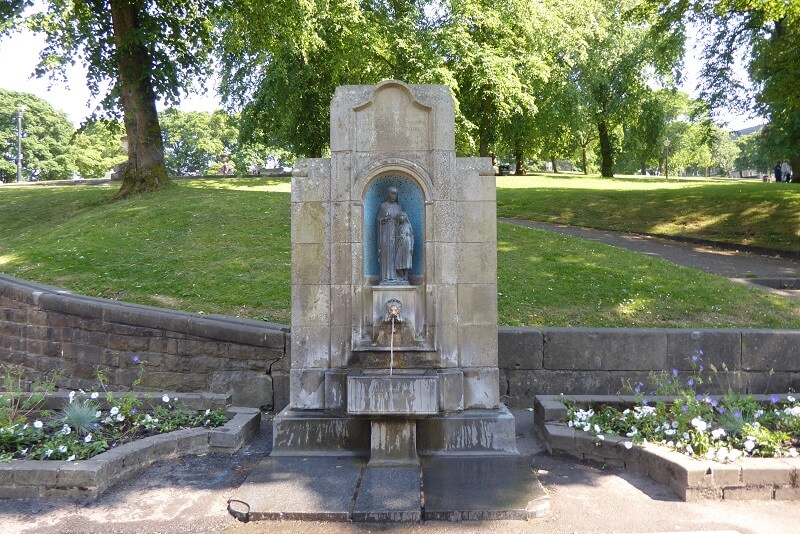
There is much of historical interest in Buxton due to the healing properties of its famous thermal, spa waters, known today and bottled as Buxton Water. The Natural Baths are located on the site of original Roman Baths which are themselves thought to be located on the site of an ancient shrine. Located near the heart of a Norman royal hunting forest, Buxton has been the playground of kings. The historic Old Hall Hotel dates back to 1573 when the captive Mary Queen of Scots stayed in the Elizabethan ‘Talbot Tower’ to take the water cure. In 1636, the philosopher Thomas Hobbes named the ‘Seven Wonders of the Peak’, two of which are found in Buxton: Poole’s Cavern and St Ann’s Well.
These and other places of interest are on the Buxton Heritage Trail in our free town guide or you can take a guided tour of the town with Discover Buxton, wander through the Buxton Crescent Experience or head for the Buxton Museum & Art Gallery to see archaeological artefacts for yourself. ***the museum is currently closed***
See our History & Culture themed trip here.
World-Class Architecture
Buxton is home to unique buildings; tourist attractions in their own right. The magnificent Georgian Crescent, recently restored, was built in the 1780s by the 5th Duke of Devonshire. The (then) largest unsupported dome in the world was added to the Great Stables in 1880 and is now known as the Devonshire Dome. The stunning ‘Theatre in the Hills’, Buxton Opera House, was opened in 1903, designed by Frank Matcham.
A Place to Relax
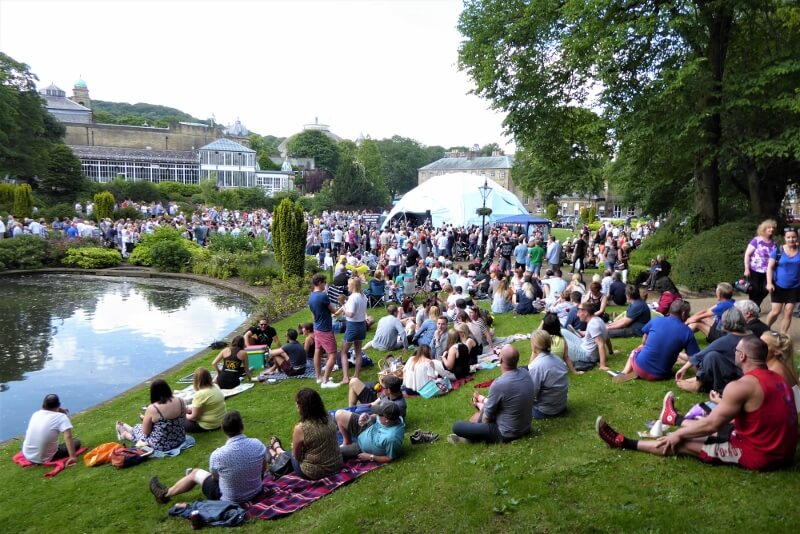
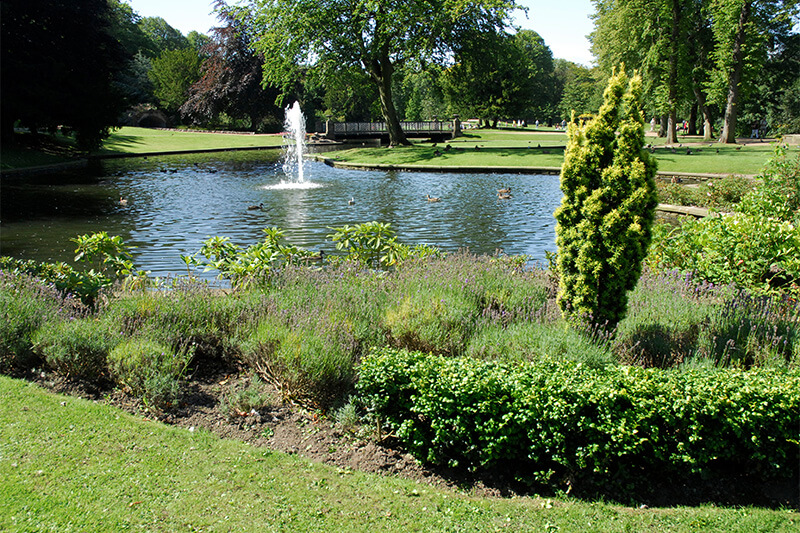
Visitors to Buxton are welcomed by the ornamental Pavilion Gardens and the many other parks and gardens in which to wander and while away the day.
Take a breath of the fresh, ‘mountain’ air, listen to live music on the bandstand and feel a world away, hidden in the hills.
Refresh and revitalise your body in the town’s famous thermal waters at the Health & Wellness Spa at the Ensana Buxton Crescent. A range of treatments and experiences are available. The town also boasts the award-winning Devonshire Spa, underneath the Devonshire Dome, and spa facilities are also available at some of the town’s other hotels.
See our Relaxing & Retail themed trip here.
The Great Outdoors
Added to all this are the wilds of the Buxton Country Park and Solomon’s Temple and numerous other woodlands. You can visit Poole’s Cavern, our famous limestone show cave, experience the high thrills of Go Ape’s aerial rope walks or witness ‘Thrills in the Hills’ at Buxton Raceway.
Buxton is also the ideal base for a visit to wider Peak District and the huge range of outdoor activities that the National Park has to offer. See our popular walks in the area and places to visit beyond the town.
See our Active & Adventure themed trip here.
A Unique Shopping Experience
Buxton also offers a wealth of independent and high street shopping opportunities and a year-round programme of fairs and markets.
Experience the boutiques of the Cavendish Arcade in the atmospheric old hot baths or under the arches of the Crescent. Locals showcase their crafts under the imposing domed Octagon Hall in the Pavilion Gardens and at the highest market in the country. Independent shops line the High Street whilst more familiar names can be found in the Springs Shopping Centre and along Spring Gardens.
See our Craft & Cuisine themed trip here or our Relaxing & Retail themed trip here.
“What about second breakfast?”
An ever expanding choice of cafés, bars and restaurants await bringing tastes from all around the world.
Regular food and drink markets can be found at Buxton Markets and the Pavilion Gardens hosts food and drink festivals throughout the year.
Breads, cheeses, puddings, ales, gins, chocolates, ice creams and oatcakes are locally produced and the surrounding farms provide meats and dairy products. Find out more about Peakland food here.
See our Craft & Cuisine themed trip here.


Buxton Boasts
Buxton boasts world-class architecture, natural wonders and an elevation that gives it the height of distinction!
Here are some of our claims to fame, now and through the ages…
Poole’s Cavern, a two-million-year-old natural limestone cave, contains the largest stalactite in Derbyshire – the ‘Flitch of Bacon’. It is over 2 metres long and more than 100,000 years old.
Buxton is the only British town other than Bath to bear the Roman name ‘aquae’ meaning ‘water’. Buxton’s Roman name is ‘Aquae Arnemetiae’ meaning ‘waters of the goddess of the grove’.
The Old Hall claims to be the UK’s oldest hotel, standing on a spot believed to have been used for the longest continuous provision of accommodation to travellers (COVID-19 pandemic excluded) – since at least the Middle Ages. Part of the current building, the Talbot Tower, which was built in 1572 to house Mary Queen of Scots, replaced a more humble structure. The building is also believed to be the earliest known British building of cross-axial architectural form.
Buxton boasts two of the Seven Wonders of the Peak – Poole’s Cavern and St Ann’s Well – the only place to do so; though some may claim that Burbage, site of Poole’s Cavern, and central Buxton, where the well stands, were two separate villages when devised in 1686.
Buxton is the highest market town in England, standing at over 300 metres above sea level. The town’s market charter was granted in 1813.
The town also boasts what was once the largest unsupported dome in the world at 44.2m – narrowly beating the Pantheon in Rome (43m). Now known as the Devonshire Dome, it was added to the former Crescent stable block-turned-Devonshire Hospital in 1880. It has become a visitor attraction in its own right and is still the largest unsupported dome in Europe.
Buxton Opera House, opened in 1903 and known as the Theatre in the Hills, bears the distinction of being the highest theatre in Britain.
Silverlands, home to Buxton Football Club, is the highest football ground in England. The first match was played there in November 1884 – a Derbyshire Cup match against Bakewell. Buxton won.
The Buxton & High Peak Golf Club on Fairfield Common is the oldest golf club in Derbyshire. It was founded in 1887.
Buxton also lays claim to being the birthplace of garden cities in the early 20th Century. Renowned town planner, Barry Parker, who lived in Buxton, and Arts & Crafts architect, Raymond Unwin, based near Chesterfield, became Chief Consulting Architects to First Garden City Ltd designing Letchworth, the world’s first garden city, whist practising in leafy Buxton.
The Cavendish Golf Club is ranked as one of the top 100 courses in England. Designed by acclaimed architect Dr Alister MacKenzie, it dates from 1925.
Buxton is surrounded by the country’s oldest national park – the Peak District National Park.
Just outside the town lies Tunstead Quarry, a ‘superquarry’ which is the largest producer of high-purity industrial limestone in Europe and boasted the largest quarry face in Europe in 1973.
The town is famed for its microclimate and its roads are often among the first to be closed due to snow. Famously, snow called off a cricket match in June 1975 after the town was hit by a freak snowstorm.
The Cavendish Arcade is home to the largest stained glass window in Britain – a barrel-vaulted, stained glass roof designed by British artist, Brian Clarke. This feature was added when the building was converted into a shopping mall in 1987.
Buxton is also home to the UK’s longest running climate change experiment. The Buxton Climate Change Impacts Laboratory (BCCIL) was launched in 1993 on a site belonging to the Health & Safety Laboratory at Harpur Hill. It is run by a steering committee of researchers from the universities of Lancaster, Liverpool and Sheffield.
Notable Buxtonians
Vera Brittain (1893-1970), author of Testament of Youth, lived in Buxton as a young girl and trained to be a nurse in Buxton. Her daughter is politician Shirley Williams, Baroness Williams of Crosby.
Tim Brooke-Taylor OBE (1945-2020), comic actor best known for The Goodies, was born in Buxton. His father’s law firm, Brooke-Taylors Solicitors, still practises in the town.
Elizabeth Spriggs (1929-2008), Olivier award-winning actress, was born in Buxton.
Robert Stevenson (1905-1986), film director whose works include Disney’s Mary Poppins, was born in Buxton.

Town Twinning
Oignies, France
The commune of Oignies (Wa-nee) is a former coal-mining town in the Nord-Pas-de-Calais region of France, 20km south of Lille. Its link with Buxton dates back to World War II. In May 1940, six soldiers from Buxton were among eighteen Sherwood Foresters killed and buried in Oignies. They died in action, fighting to slow the German army’s advance towards Dunkirk. Their resistance, at a key crossing over the canal, bought vital time for the evacuation. On 28th May, the Nazis entered Oignie, burning houses and shooting citizens in revenge. Following the war, Oignies became the first ‘Ville Martyr’ (martyred town).
The towns were twinned following a visit to Oignie by three members of the Royal British Legion. The French town always tended their graves and held an annual commemoration ceremony on 28th May. In 1965, this was attended by three former comrades of the fallen. After this visit, the relationship between the two towns grew, galvanised by Buxton’s Festival of Music at which Oignies’ town orchestra ‘L’Harmonie de Oignies’ performed in 1966. The following year, the Friends of Oignies and Les Amis de Buxton were founded and the two towns were officially twinned in 1968.
There is an annual exchange trip between the two organisations, with Buxton playing the host on odd years and Oignies on even. Regular events include a memorial service to honour those lost in the war, a fancy dress party and dinner dance and the annual sporting contest for the Albert Boitrel Cup. The Friends celebrated 50 years of twinning in 2018. New families and individuals are always welcome to join the Friends.
Bad Nauheim, Germany
The town of Bad Nauheim is in the state of Hesse in Germany, 35km north of Frankfurt. It is a world-famous resort, noted for its salt springs, which are used to treat nerve and heart diseases.
The Bad Nauheim Twinning Association was created in 1986 when Buxton became one of four international partners to the German town. There have been exchange visits by association members and different clubs from both towns, including choirs, sports teams and schools.



From November 2025, this website is owned and managed by Buxton Civic Association Ltd - Charity No. 258163.

Buxton Civic Association celebrates the natural and human heritage of Buxton including its outstanding buildings and wildlife. We conserve and enhance this heritage and advocate its importance in making Buxton a special place to live or to visit.